
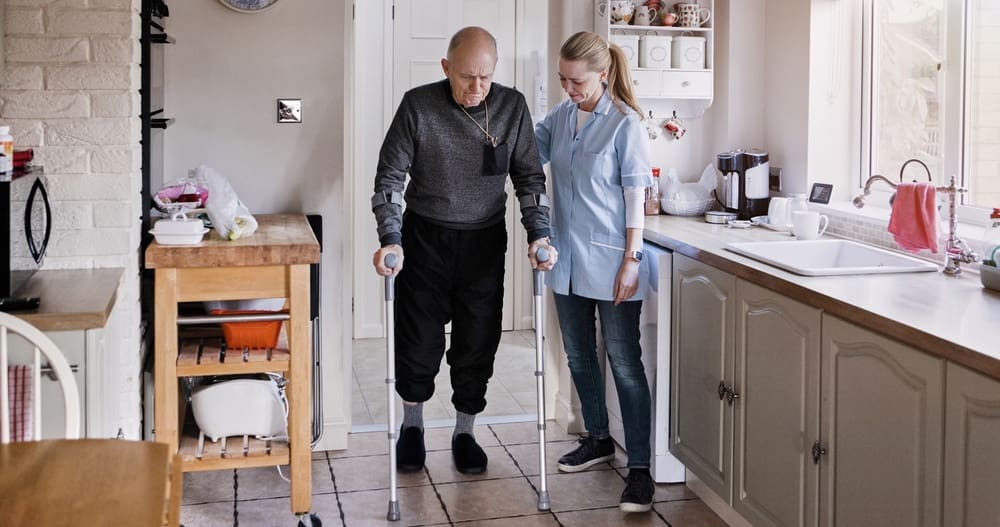
When we talk about home accessibility equipment, the focus is often on the person experiencing limited mobility. But ramps, stair lifts, ceiling lifts, accessible bathrooms, and other modifications can also make an enormous difference for family members and professional caregivers.
Caregiving frequently involves assisting with transfers, navigating stairs, bathing, entering and leaving the home, and other everyday activities. The right accessibility equipment can make those routines safer and more manageable for everyone involved.
At All American Mobility, we look at the entire household when recommending accessibility solutions. That means considering not only how someone moves through the home independently, but also where and how a caregiver provides assistance.
Reducing the Physical Demands of Caregiving
Helping another person move can be physically demanding. Transfers between a bed and wheelchair, helping someone navigate stairs, or assisting with bathing can require significant lifting, reaching, and repositioning.
Accessibility equipment can reduce some of that physical work.
Depending on the situation, solutions may include:
- Ceiling lifts for assisted transfers
- Stair lifts for moving safely between floors
- Wheelchair ramps for easier entry and exit
- Platform lifts for elevated entrances
- Accessible showers with adequate caregiver space
- Grab bars and other bathroom supports
Rather than relying entirely on physical assistance, the home itself becomes better equipped to support daily mobility.
Ceiling Lifts Can Make Transfers More Manageable
Transfers can be among the most physically challenging parts of caregiving, especially when someone cannot safely stand or support their own weight.
A ceiling lift can help move someone between locations such as a bed and wheelchair while reducing the amount of manual lifting required from the caregiver.
The layout and needs of every household are different, so proper assessment is important. The goal is to create a transfer system that works within the room and supports the person’s actual daily routine.
Stair Lifts Reduce the Challenge of Multiple Floors
A multi-level home can become difficult when someone has trouble climbing stairs.
Without accessibility equipment, caregivers may find themselves providing physical support on the staircase or rearranging the home so the person can remain primarily on one floor.
A stair lift provides another option. It allows the user to travel between floors while seated, reducing the need for a caregiver to physically assist with every trip up or down the stairs.
For someone who can transfer onto and off the seat safely, this can restore access to bedrooms, bathrooms, and other areas of the home.
Accessible Bathrooms Can Improve Daily Care
Bathing and toileting often require close caregiver assistance, and traditional bathrooms are not always designed with that in mind.
Narrow shower entrances, high bathtub walls, slippery floors, and limited space around the toilet can make assistance more difficult.
Our accessible bathroom remodeling services can incorporate features such as:
- Low-threshold or roll-in showers
- Properly positioned grab bars
- Shower seating
- Handheld showerheads
- Slip-resistant surfaces
- Comfort-height toilets
- Additional maneuvering and transfer space
These changes can improve accessibility for the person receiving care while also providing caregivers with more room to assist safely.
Our article on Aging in Place: Modifying Your Bathroom for Maximum Safety and Comfort covers additional bathroom modifications to consider.
Ramps and Platform Lifts Make Leaving Home Easier
Getting someone in a wheelchair out of the house should not require multiple people lifting a chair over steps.
A properly designed wheelchair ramp can create a continuous accessible route between the home and driveway or sidewalk.
When there isn’t enough room for an appropriate ramp, a vertical platform lift may provide a more practical alternative.
These solutions can make routine trips to medical appointments, family gatherings, shopping, and other activities easier for both the mobility device user and caregiver.
If you’re comparing these options, our guide to Vertical Platform Lifts vs. Wheelchair Ramps: Which Is Right for Your Home? explains some of the factors that can influence the decision.
Accessibility Equipment Can Support Independence
One of the most valuable benefits of accessibility equipment is that it can sometimes reduce how often assistance is required.
Someone who can independently use a stair lift may no longer need a caregiver every time they want to change floors. A properly designed ramp may allow someone using a wheelchair to enter or leave the home with less assistance. Grab bars and accessible bathroom features may allow greater independence with personal care.
That independence can benefit both people.
The person receiving care maintains greater control over daily activities, while the caregiver can focus attention where assistance is genuinely needed.
Caregiver Safety Matters Too
Caregiver injuries can affect the entire household. Repeated lifting, awkward transfers, and physically supporting another person can place considerable strain on the body.
The Occupational Safety and Health Administration’s guidance on safe patient handling explains how manually lifting and repositioning people can expose caregivers and healthcare workers to musculoskeletal injuries and discusses equipment-assisted approaches to reducing those risks.
Although home caregiving is different from working in a healthcare facility, the basic principle remains relevant: whenever appropriate equipment can reduce unnecessary manual lifting, it is worth considering.
Consider Both Current and Future Needs
A solution that works today should also be evaluated in the context of tomorrow.
Mobility needs can change, particularly when someone is aging in place or living with a progressive condition. Caregiver needs may change as well.
Our CAPS certified approach considers factors such as:
- Whether wheelchair use may increase
- Whether transfers are becoming more difficult
- Whether a caregiver needs additional maneuvering space
- Whether the home can accommodate future equipment
- Whether a temporary or permanent solution makes more sense
Planning ahead can prevent a family from repeatedly modifying the same area of the home.
Start with the Home, Not the Equipment
It can be tempting to decide that you need a particular product before evaluating the home. We prefer to start by looking at the challenges you and your caregiver are actually experiencing.
Our free in-home accessibility assessment allows us to evaluate the environment, discuss daily routines, and determine which changes could provide the greatest benefit. Our article on What to Expect During Your Free In-Home Accessibility Assessment explains what that process involves.
Sometimes the answer is a stair lift or platform lift. In other situations, a ramp, ceiling lift, or bathroom modification may address the problem more effectively.
Creating a Home That Works Better for Everyone
Good accessibility design benefits more than one person. It can give someone with limited mobility greater independence while making everyday caregiving safer and more manageable.
As a Disabled Veteran Owned Business with CAPS certified accessibility expertise, we help families find solutions based on the way they actually live and provide care. If caregiving has become more physically demanding or parts of your home are becoming difficult to navigate, visit our All American Mobility showroom in Fredericksburg or contact us to schedule a free in-home accessibility assessment.